Friday, 20 January 2012

So why the bloody hell would you go there?


I’ve been here for about 6 months. So far, no visitors. Now I’m not surprised, it’s not as cheap to get to as say, Indonesia, the food is better anywhere in Asia, it’s not as safe, and basically it’s an unknown quantity. Actually I’ve never met anyone who has said, “I’ve always wanted to go to PNG!”. So, with this blog entry, I don’t expect to singularly boost sales for Air Nuigini (please repeat: I will never never fly Airlines PNG), but I still feel that it couldn’t hurt to promote the country a little. If only as a means to put up some nice pics of all the good things here (in the small part of the country I call home). And also, some of you have been requesting more pictures (a subtle call for less prattle? not likely!) so here you are…..

The Tourism slogan for PNG for a long time was “The Land of the Unexpected”. Of course, this became the basis for much sarcasm amongst the expat community. No medicine in the hospital pharmacy? More potholes in the road than road? A boat has taken you to a small island and now there isn’t enough fuel to get you back? Two Prime Ministers? Ha! Surprise, you’re in the Land of the Unexpected. The trouble is, it doesn’t take long for one to start assuming that things will go slowly/not to plan/not happen at all/happen in a way that is completely ridiculous and so it all becomes very predictable, and, well, expected.

Maybe that’s why they changed the slogan to ‘Land of a Million Different Journeys’. I think this might refer to what happens when you try to find out what’s going on (when something that’s supposed to be going on isn’t going on) and you hear a million different incomprehensible stories explaining why things have gone to shit. I propose that the next slogan be simpler, “PNG – it’s never boring”. And this, I can assure you is true. It’s also really beautiful, so let’s get started with the photo display.


One popular thing to do is to climb one of the many volcanos. This is an activity not to be undertaken lightly, a few years ago an Israeli man died after he fell into the volcano. (I’m not very good at this tourist promotion thing am I?) I’m told that it’s perfectly safe to climb if you don’t try and go leaning in near the edge. I haven’t climbed any of them yet but we plan to climb Turvavur soon, (the little one that’s smoking in the pictures) I certainly won’t be trying all that hard to get a look in. Of course, you don’t have to climb the volcanos to enjoy them. I see them every day, and never tire of doing so. They look so different, at different times of the day, with different weather patterns. They truly are remarkable geographic wonders. You can also visit the volcano observatory if you arrange to do so beforehand and see the work they do there (which may involve watching them watch volcanos?).
That's not all cloud - that's smoke!


At the base of the volcanos, and really, all around the island, are the tunnels constructed during WWII by the Japanese who occupied Rabaul at the time. Or, as was pointed out to me, the tunnels dug by local people for the Japanese army. The Japanese army used the tunnels for storage, accommodation, even for hospitals. One underground tunnel hospital could accommodate 800 patients. Today, you can visit these tunnels and walk through them. John Lau, a prominent man around town who is known to us through his generosity to all the volunteers who live in ENB, was born in one of these tunnels (many PNG born Chinese were interned there). I guess that’s the amazing thing when visiting ‘historical sites’ around town, you can then easily talk to people whose lives were shaped by related events.


Entry to a tunnel system, a not too tall person can stand up in here

This may just look like a rocky formation but the gaps at the base are storage tunnels.


Still on the subject of ‘historical sites’ the Bitapaka war cemetery (just out of town) is a strangely beautiful and contemplative place. Many of the Allied troops who died here (including many from India, Pakistan and Sri Lanka) lie in graves marked ‘soldier known unto god’. The grounds of the cemetery are huge and immaculately kept. The truly paradise like surrounds somehow make the senseless deaths of many young men all the more sad. It also seems somewhat bizarre that so many men, from such different parts of the world were united in fighting in a place so remote and foreign to them where the local people had absolutely nothing to do with the war other than it landed on their doorstep.


Yes people really dress up like this - will explain
 in later blog entry
For more war related stuff, there is a museum which has a collection of war remnants, cultural artefacts and a few unfortunate ‘pets’, namely a crocodile in a small pool of water and a cassowary in a cage. Not perhaps the highlight of the tourist itinerary. When Geoff and I went there, the sign said it was open, but the gate was locked. We just yelled out to the gardener who let us in and took our 5 kina ($2.50Aus). Apparently this is always the case and many people go and leave, thinking that it’s closed. Some of the records of the old town and some of the items salvaged from Japanese war wrecks are worth a look, but the museum certainly could do with some love and attention. Then again, this is the price you pay for what some tourists consider the holy grail of tourism – there aren’t any other tourists. Of course, you could skip the museum and just walk along the main street. There are literally abandoned and rusted WWII tanks just lying by the side of the road.    


What else? Ah, the market. I've written about the market before, so I’ll just include these two photos and add that the market has some things which make good souvenirs like earrings made from Tolai shell money, bilums (colourful woven wool bags from the highlands) and woven grass products, (mats, purses, baskets). There aren’t really enough tourists to support the crafts at the market but the products aren’t fake artefacts made to attract tourists (like so many of the awesome things for sale in China), local people carry bilums, use woven purses and wear jewellery from the market too. 
Basket, bilum, coin purse, earrings
The market is also a great place to talk to people. Everyone at the market is super friendly and you can practice your Tok Pisin. For those of us who love languages, this is fun, and for those of us who claim they ‘can’t learn a language’ will find that suddenly they can! Tok Pisin is certainly not as intimidating as Mandarin or the like, eg: displa i kostim hamas? = How much is this? Easy right?


Lastly, but most importantly, the beaches. Let’s be honest, it’s all about the beaches. Some of the most beautiful places I’ve ever seen are the beaches around the Duke of York Islands (about 40 mins away by boat). You can arrange a boat ride out there and a village stay with a local dive company or if you know someone with a boat, (as we do) you can just head out (though you may need to pay a small amount to land owners if you come across any – fair enough). Also beautiful are the beaches at Wata Plantation (sorry, some FB friends have already seen some of these photos) where we went for a boxing day party and Kabaira (where we often dive) is a stunning place too. Little Pidgin island is also a beautiful place and last year we went camping there with some friends (it’s uninhabited and only a 20 min boat ride from Kokopo). Our friends caught a tuna on the 20 min ride out there and ate it sashimi style for dinner. Awesome.
Wata Beach
Wata Beach


Little Pidgin Island - where we camped

Rapopo Beach, Kokopo

The Beehives in Simpson Harbour, Rabaul (many wrecks lie in this harbour)

The Duke of York Islands

The Duke of York Islands

The Duke of York Islands, kids playing


The beaches are amazing for just relaxing and swimming but also the diving or snorkelling is top notch. There are even some war wrecks in about 5 metres of water which you can easily see just snorkelling. Pods of dolphins (the largest I’ve seen was uncountable, hundreds) also regularly swim near Kabaira and the Duke of Yorks and they are amazing to watch. My friend Mike has some great videos of them leaping, twisting and balancing on their tales (kind of like Seaworld without the sadness) which I will endeavour to get my hands on once he’s back in the country. 
dolphins race the boats


clown fish


some kind of slug?


awesome evil-eye fish

 sea slug (they are thicker than your arm)


My absolute favourite, the Frogfish. He has a permanent home on an abandoned
metal frame on the Kabaira house reef. 

He even has little fin-feet to walk around on!

This fish stalked us for 45 minutes. You can't tell here, but it's  the size of a small TV.

Big lion fish (sorry, not good light)


OK, it looks like a lump on the wreck, but it's a Stonefish in camaflague. 


The other thing I love about the beaches here is that whenever you're on one, you can see mountains or volcanos as well. There are some truly spectacular views around. Oh, and just because I want to include some pics - I've never been anywhere before where there are so many colourful flowers blooming. In the six months that I've been here, the trees have continuously bloomed in stunning pinks, reds, purples and white. 


our street

our street, taken from in front of our house

frangipani are everywhere and they smell so nice


Lastly, the great thing about Kokopo, and this probably goes for other parts of the country, is that as there aren’t huge numbers of foreigners (though there are certainly a lot more than I expected) if you are new in town, it’s easy to get in touch with people right away. Everyone gets how difficult it is to access stuff and so people become very generous with their things, their time and their knowledge. You can be in town for a few weeks and people will invite you to their parties, take you out fishing on their boat, give you a lift to a nearby village, etc. And if you walk around, greet people in the local vernacular, carry a billum or – gasp – wear a ‘meri blouse’ (like a muumuu) you’re in like flyn with the locals. (If you’re a man though, I don’t recommend the meri blouse plan, maybe a laplap or a bush knife?) Walking around, not driving, attracts positive attention, people are very happy to see that you’re not scared of them (they hate the rep they get from the troubles in places like POM). You also win friends in abundance if you’re seen drinking from a coconut and eating locally prepared food at the market. (I’ve heard, countless times – “you can eat PNG food”! Lovely to be congratulated for knocking back some banana, sweet potato and freshly caught tuna!)

It’s often said in tourism brochures that the warmth of the local people is the thing you’ll remember, blah blah blah, but what can I say? It’s true here. In the picture below, Geoff and I were walking through bushland (for only about 40 mins), with our colleagues and local people from the centre of Watom Island to the coast. We all had to carry diesel and cargo and the path was quite treacherous. I kept slipping around in my thongs (jandles, flip flops, whatever) and nearly losing my heavy load (oh OK, I was carrying the life jackets – but they were awkward). All the other people wanted to help me, including the women you see here who are balancing much heavier loads on their heads. You can’t see it in the picture, but one young woman even had a load on her head, a bag in one hand and a baby balancing on her hip in the other hand. They all still tried to help me. Everyone was smiling and laughing and when we got to the sea, they all just ran in in their clothes (as did I). 
Watom Island
We met some fabulous people on Watom Island that day; in PNG, people love to ‘stori’, just sit around and chew the fat and they are genuinely pleased to have international visitors on their little island paradise. Somehow, they make you feel happy you just turned up.

So, anyone in? Oh sure you need so many vaccinations you’ll feel like a pin cushion. You’ll need to fly through POM. You could get Malaria. Or Dengue. It’s hot. There are no fabulous dining spots. We don’t have any ‘atmospheric laneways’ (that’s for you Melbourne). Yet somehow, I have a feeling, you’ll feel happy you turned up too. (awwwww- admit it, you kinda wanna come now don't you?) 


Friday, 30 December 2011

PIGS


This entry is a collection of amusing stories I have heard and things I have witnessed about pigs in PNG. In PNG, pigs are important. They’re cheap to feed, easy to look after and delicious (so I’ve heard) when the time is right. They’re also very expensive once fully grown and therefore highly prized. I’ve heard of people here buying a piglet when they have a baby and fattening the pig as the kid grows. By the time their kid is ready to start school, the pig is ready to pay for the school fees. Kind of like a college fund, only smellier.
In Australia, I never thought about pigs, or heard funny stories about pigs. They don’t come up really, as a topic - well not for the average Australian. Unless you’re dad has a pig farm or something, which leads me to amusing pig story No.1.

Amusing Pig related story No. 1
This story comes from an Australian volunteer working in PNG who has done a particularly fine job of getting to know everyone. Truly everyone. She has done this just by being her sunny self, always willing to chew the fat, find out what’s going on, and of course, she has learnt Tok Pisin. Not so long ago, she told me a story about when she first arrived in Moresby. Keen to get to know people and to practice her language skills, she had a good chat with some young lads working in security around the compound she was staying at in POM. They talked about all the usual stuff, where they were from, and about their families. It therefore quite naturally came out, that her father has a pig farm. A commercial pig farm. With about 10, 000 pigs. Being very new to PNG at the time, this volunteer had no idea what that might mean to a prospective beau (I sincerely doubt she considered herself on the market). The very notion of marrying into a family with 10,000 pigs! Well, I think it was a bit much for the lads to handle. Needless to say, she received a lot of attention from the security boys as the story of the prospective pig rich father-in-law spread and she now keeps the specifics of her father’s business out of introductions with PNG’s eligible bachelors. 

Amusing Pig related story No. 2
This one comes from another volunteer who works in juvenile justice. She hasn’t been here very long but seems pretty handy with the Tok Pisin already. But no one’s perfect. This story shows how funny a little language error can be.
The volunteer had heard that there was a boy in the cells. She went to have a look and saw an angelic looking 14 year old boy who was apparently in for murder. She was naturally shocked to think that one so young could kill. She asked the boy, in Tok Pisin, about his motive and her inquiry was met with something along the lines of:
“Em ikam long gaden bilong mi na em ikaikai sampela kaukau na kumu, olsem mi kilim em.”
He came into my garden and ate some sweet potato and greens so I killed him.

Of course she was shocked. She spoke with a friend who is a more advanced speaker of Pigin and found out that ‘kilim’ doesn’t always mean ‘to kill’. It can mean to fight with some one. Now feeling somewhat optimistic, our volunteer returned to the boy in the cell and sought clarification:
“Yu paitim em o yu kilim em na em idai pinis?”
To which the reply was:
“Em idai pinis.”

Well, I think that one needs no translation. Trying to make sense of what seemed to be such a senseless death, our heroine had a conversation with a local co-worker about land rights in PNG and the importance of land and land ownership. She tried hard to understand how trespassing on someone’s land might enrage them to kill. She later heard that the boy had been released and that things had been ‘sorted out’ and all was OK. Shocked again, she wondered how he’d been allowed to go free after committing murder to which she was assured that compensation for the pig had been settled. A PIG.
He killed a pig for eating all his families veges! In Tok Pisin, he/she/it is all one word, ‘em’. Somehow, the fact that he killed a pig and not a man had not been apparent. Which brings me to say, it wasn’t so very nice to kill the pig either, but can you believe he was imprisoned – for killing an animal on his own land. Yep, don’t mess with people’s pigs in PNG. Big trouble ensues. Ahhh, what a lovely lead into Amusing Pig related story No. 3.

Amusing/disturbing Pig related story No. 3
OK, this one’s not really a story. But I’ll just ignore that and get on with it. When expats come to live in PNG, they are usually given some very hard to follow advice, namely; if you are driving and you hit something – keep going. Yep, we are all encouraged to ignore the good Samaritan laws we’ve been told to follow all our lives and instead, hit and run. I could go on at some length about this one, but to keep things short, let’s just say that if the general idea of stopping at the scene of the accident is to assist and you wont be able to offer much assistance if you’ve been killed in retaliation then stopping is only adding to the body count (not saying that I agree with this advice though). We’re told to keep going, get on the phone or radio, seek assistance for them but don’t stop your vehicle if you hit a person. Or a pig. If you hit someone’s pig they’ll be pissed off big time and apparently you don’t want to be around to see it. Pigs are prized and killing someone’s pig means big bad news for you.

Amusing pig related story No.4
In general, pigs can be given as compensation for loss of property, general bad behaviour or just to smooth things over. In his book on PNG, Tim Flannery talks about how he offered a pig to a village in the highlands so they would abort their plans to murder him (it worked). Paying with pigs happens in other Pacific countries too (see Figure 1 for evidence that a pig fine can be issued to anyone!). For this reason, I have come up with an awesome recommendation for the Australian volunteer program to ensure the safety of those in PNG on assignment. I like to call it the ‘Back Up Pig’ program (although others claim that ‘Dial a Pig’ is catchier).
Figure 1.

Basically, everyone in PNG working as a volunteer should have speedy access to a pig should the need arise. I mean, it’s fine for locals, they’ve got vast networks of peeps with pigs, but what about us? If I piss someone off how am I gonna produce a pig in a timely fashion? How would I know how to choose an appropriate pig and know what to pay? In the ‘Back Up Pig’ program, all volunteers would have a pre-organised pig provider, who, for an agreed price could deliver a pig where it was needed pronto.
My plan was to convince Hannah, (who does a stellar job of co-ordinating the New Zealand volunteer program in PNG) to include in a presentation she was giving to Australians on her work, a farcical power point about the importance of the ‘Back Up Pig’ program in the security plans of the NZ vols. Sadly professionalism triumphed over what could have been comedy gold. I would have loved to see the faces on the attentive bureaucrats present :)

What’s that? You’d like another amusing tidbit about pigs in PNG? And a visual? Oh all right then.

Amusing pig related story No.5
Recently, Andersons, a supermarket in Kokopo, had a competition for which first prize was – yep you’ve really got the hang of this – a PIG!! I like how in the picture, it looks like a dirty black bush pig, which is probably what it is…


Amusing pig related story No. 6
When the Australian Navy were here recently, blowing up unexploded ordinance, a couple of villages were particularly helpful in locating bombs, mines and other such wartime nasties. I believe these villages were also inconvenienced as the Navy moved in to do dangerous exploding-y things. To say, ‘thanks’ and ‘sorry for the trouble’ the Aus Navy bought the villages a pig. Would love to have seen how they wrote that into their expenditure.

So, I hope I have painted an accurate and well rounded picture of the prized place the pig (or pik) has in PNG. If I hear any more great pig related things, I’ll be sure to up date you. Who can ever have enough pig stories!!

Gutpela Nui Yia long yupla na noken lus tingting – sapos yu spak na yu draivm, yu long long.
(my personal Tok Pisin version of ‘if you drink and drive you’re a bloody idiot’ but not sure how good it is :)


Saturday, 19 November 2011

Man Up - PNG Style


First and foremost, this is not an entry which aims to be informative. I think it’s pretty clear that I lack the sort of plumbing required to know what it means to ‘be a man’ and I’ve certainly never given the concept of masculinity in any culture much thought. (OK, I may have done some wondering whilst in Japan – a land where a man can never over pluck his eyebrows or own two many manbags.) Here in PNG, my understanding of manhood is somewhere south of nothing – so, in this entry, I’d just like to raise a few things, throw out a few ideas, share my observations and all that.

Here are some of the things I’ve observed about men in PNG which, according to my western whitey ways are somewhat contradictory, or at least worth pondering…..

Men in PNG carry bush knives. Correction, males in PNG, including small boys, carry bush knives. This makes them look really tough. The other day I was walking down the street and I saw a couple of young men, shirts off, upper bodies ripped, swinging machetes to cut grass by the side of the road. I was on my own and given all the scary stories you hear from PNG, this kind of situation can makes one a little nervous. There were also some little boys playing on the footpath in front of me. Suddenly one of the young men, lunges forward towards the path (and me – ahh!) but only so he can use the back of his knife to give the kids a little smack to get them to move off the path and out of my way. He follows this with ‘sori misses’ and smiles shyly at me.

This little tacker practices with a knife. His parents gave it to him to play with to keep him quiet. 


So far, all of the men I encounter around town greet me in a very old fashioned and courteous way. This is only comment worthy when you can picture them also carrying a bush knife and speaking with a mouth full of buai. Buai, or betel nut, is chewed here with mustard and lime. It’s gives the chewer a high as well as a mouth full of thick, blood red saliva. It also seems to rot their teeth. This means that sometimes when men speak to you they kinda look like recently satiated vampires who have lived in eras pre-dentistry. 

On the flip side, the buai also makes their lips really red, so although they come across partially like tough men of the land, they also, at times, look like kids who’ve gotten into their mums make up.

Now, for a parallel with Japan – everyone carries bags here. Men, women, kids, all carry bags either over their shoulder, around their neck like a necklace, or with the strap like a headband and the bag hanging down their back. So I’m thinking it’s us in the west who have peculiar ideas about men not carrying small bags. Everyone here carries woven bags called bilums, and stylistically, they are completely non gender specific.    

Also, men sometimes stick leaves or feathers in the centre of their afros. The women don’t do this where I live (although I’m told in other provinces, women sometimes put a flower behind their left ear to show they are married or the right ear to show they are single). Many of the women do however, have facial tattoos. Sometimes these are small dots on the forehead, sometimes long straight lines cutting diagonally across the cheeks (the markings relate to where they are from). It certainly makes them look tough – significantly tougher than a man with flora in his hair :) 

Anyway, when you combine handbag carrying, bright red lips, hair adornments, a laplap (sarong) and a muscular arm wielding a machete, you get a pretty interesting visual representation of a manliness which defies and challenges what we think of as ‘manly’ in Australia. I really love living outside of Aus for these kinds of culture readjustments. Travelling definitely gives you an insight but living somewhere, just going about your everyday life in another context, really messes with your sense of ‘normal’ in the best possible way.

But I digress. Moving on from the aesthetic stuff, through the research I’ve been involved with, I’ve encountered some really interesting, and at times confronting things concerning cultural expectations of men in PNG.

We (the research team, who are all PNGn except for me) have heard from locals about how men don’t want to accompany their wives to antenatal clinic visits because, wait for it, they’ll be teased by the pregnant women at the clinic. Or, they’ll be picked on by others in the community for walking around with their pregnant wife. When I asked what kind of terrifying things others might say about them, we were given examples like ‘oh, yu papa pinis!’ (oh, you’re already a father!) or they might be called a dog for following their wife around, or, someone might say ‘traim na isi liklik’ (try and slow down a little – as in, you’ve already had sex and gotten her pregnant, now leave her alone and stop trying for more). Seriously? Their manhood is shattered because they got their wife pregnant and people know that – gasp - they actually care about their wife and want to accompany her? We’ve also heard stories of men creeping into labour wards at night to visit their wives and give them food. Of course, they had to sneak in so no one would see them. Oh the shame!

One of the health workers also told us that men shouldn’t accompany their wife to the baby’s immunisation visit because women can handle it but the father will get too upset when the baby is in pain. I mean really. When I heard this, I couldn’t help but mutter, ‘sounds like they need to man up’ – which then meant I had to explain the term ‘man up’ to my colleagues who thought it was very funny and readily agreed (they are women and all have a background in health work). 

Just in case I’m giving the impression that men in PNG are 100% pansy, I should also present to you an alternative scenario. A few months ago, Geoff and I attended, along with Hannah and Mike, our awesome NZ buddies who live across the road, a fire dance performance. The performance was held to honour the outgoing archbishop, who is originally from Germany, but has lived in East New Britain for decades and is greatly respected in the Catholic community here. In particular, he has worked closely with the Baining people, who live in inland ENB and are culturally and linguistically different to the Tolai, who live along the coast. The Baining do not usually conduct any cultural activities on Tolai land, but an exception was made for the archbishop.   

We went along, and to be honest, I expected some sort of running across hot coals kind of thing. Instead, men dressed only in heavy, elaborate headdresses and strips of vegetation ran through a huge fire of burning logs. Flames were leaping to head height and the logs were all stacked loosely on top of each other so that even if they hadn’t been on fire, running over and through them could easily have resulted in some bad ankle damage. To the side of the fire, men chanted and beat drums. The whole thing was pretty crazy and the men doing the fire runs – brave or insane depending on your take. The audience also had to duck and weave at times as flaming logs were accidently kicked out of the fire and sent flying into the seated audience. (Anyone who sooks about Australia being a nanny state should really move to PNG.) The performance took place on a local school oval, where our friend Mike is a PE teacher (amongst many other roles). As we marvelled at the dancing fire men, he looked on wistfully as his sports field was set alight and a large section of grass turned to a pit of ash. Ahh the challenges of life in the ‘land of the unexpected’.


But, the point of this story was not to highlight the challenges of teaching PE in PNG, but that here is a place where some men are scared of being teased by a bunch of pregnant ladies in oversized floral dresses or of seeing a baby cry from a needle jab, yet at the same time, men are willing to run through six foot flames to say ‘thanks for being a tops archbishop’.

So, what does it mean to be a manly man? Is it mainly about how you present yourself, physically, to others? Or is it more about the level of hardship you’re willing to sign up for? The more time I spend outside my comfort zone, the more our expectations of gender seem highly arbitrary.  

I wonder what people from PNG would make of men in Australia? Walking around holding hands with their women, a mouth full of straight pearly whites, no skills with anything bigger than a steak knife…….

Anyway, those are my observations of men in PNG. Sorry for the lack of photos today but I didn’t think it very ethical to take photos of random men and post them online. I don’t want to get myself into trouble and have to purchase a pig. I’ll explain that one another time.

Lukim yu na gutpela wiken bilong yu J

Tuesday, 8 November 2011

Let's Shopping!

Before I arrived in Kokopo, I really had no idea about what you could, or could not purchase here. Needless to say, I have been absolutely flabbergasted at the incredible array of food products available (couscous, balsamic vinegar, miso paste, sun dried tomatoes) and also very curious about consumption in this part of the world. Who the hell is eating couscous? These kinds of products are not cheap and locals I’ve talked to don’t even know what couscous is. Sure there are quite a few expats around, but still! One look at the use-by date on several products and you are part way to an answer. Fresh juice that expired a month ago? Lovely. Jokes aside, we are very well serviced here in Kokopo :) 

So many products!
It's the little Japanese shelf! Can you believe I can buy wasabi in PNG?
The Tropicana supermarket (across from where we live). Note all the utes and 4WDs. Anyone lucky enough to have access to a car drives something like this.


There are a number of large supermarkets in town, some of which also sell footwear (cheap runners and thongs, sorry jandels to my new found friends), clothes (T-shirts, shorts and meri blouses or muu-muus) and homewear (kettles, crockery, towels, etc). 

An overly excited mannequin at K Central Mart. Extra funny considering how conservatively people dress in PNG :)

Every store without exception sells a large array of bush knives. On more than one occasion Geoff has paused, mid grocery shop to look longingly at the bush knife display until I poop on his party and point out that a) he has no need for a bush knife and b) lacks the skills necessary to brandish one. Around here it seems that whilst Australian kids practice forming even letters with their grey leads in the pursuit of a pen license, kids in PNG start out with butter knives, move on to steak knives, and by the age of about 6, with the right kind of progress, are the proud owners of their very own machete. 

The supermarkets here can be really expensive, depending on how far something has travelled and how hard it has been to get it here in one piece. Icecream can be $30 (Australian) a tub, and a block of cadburys will set you back about $9. This is good for the waistline, but not so good for mental wellbeing. Yep, now I think I know how smokers feel………

The Kokopo market is however cheap and fabulous (although the ups and downs of the pineapple economy continue to confuse me - sometimes they cost 10 kina (about $5) then, just a few days later, only 2 kina??). You can buy all manner of tropical fruit, veges, salted fish, cooked lunches packaged in palm leaves, and buai (betel nut which gives you a high if you chew it). If you would ever like some evidence of how your tax dollars might be spent in a worthwhile fashion in overseas aid, look no further than the local market in Kokopo.  Big, covered, clean, well built, spacious with greenery – the local market is the heart of the town and built with Ausaid money. Tall breezy wooden structures house women and their small children as they sell their garden produce or crafts. The buildings are surrounding by trees and there are lots of fresh water taps and effective, covered drainage channels. When you think that some people have to travel from far away and sleep in the market the night before just to sell their produce, you can imagine how important it is to have a clean place with adequate shelter and water supply. The market also has a big colourful mural around it celebrating Papua New Guinean independence from Australia, with PNG and Aus flags. The market is a source of pride for local people and everyone keeps it clean. It must be one of the few places in town where people don’t chew and spit buai.
Mouli stands (a citrus fruit) in the market
Delicious veges, best eggplants ever. This bunch for less than 50c.


Tomatoes, capsicum, ginger and spring onion.


Lime for sale (to chew with your Betel nut for that island high)


The craft building at the market

The cooked foods stall

The PNG version of bento (called a karamap  in Tok Pisin or Tortorgor in the local tongue). Awesome environmental friendly packaging. Smoked and salted tuna in the background.
Inside the Karamap - cocount creamed greens, banana, fish and a little tomato 

The bus stop in front of the market, the mural in the background celebrates PNG independence.


Australia can’t take all the credit though, while Ausaid built the main buildings, Japanese aid also contributed in a very awesome Japanese way. In the centre of the market is a small, round building with excellent, always working air-con. Yep, it’s the Japanese funded fish room. I like to imagine a very serious JICA bureaucrat surveying the completed market, brow furrowed in a look of deep concern as he realises that no one has any means of keeping their tasty fish fresh. He hastily makes contact with Tokyo who immediately authorise the fish room’s construction. No one should have to live in these conditions! All jokes aside, the JICA program has done (and is doing) great stuff here, and the cool room is tops. (Perhaps the contributions of the various countries who provide aid to PNG is a future blog topic?)

Back to shopping….
Those of you who know Geoff well, know his deep, committed and truly passionate feelings for Savers in Footscray – a second hand clothing store. Luckily for Geoff he can still get his fix of second hand scavenging glory at ‘Labels’ – the Kokopo equivalent. Basically, shipping containers of second hand clothing come from Australia and these clothes are sold very very cheaply here in Kokopo. This means all the clothes are the same brands available in Australia, things like Susans and Target and if you’re lucky, some higher end stuff. One friend bought a Paul Smith shirt for less than a dollar. Who knew in Australia that your old discarded T-shirt might now be happily worn by a kid in rural PNG?

Kokopo also has a few pharmacies which are surprisingly good. They stock a vast array of products which reflect both the vast array of ways in which one’s health can go pear shaped in the tropics and the DIY approach that’s needed in the absence of easily accessible medical help. Serious antibiotics can be bought over the counter and the pharmacies sometimes stock the effective malaria treatments that the hospitals sadly lack.

We also have some stores selling junk food, though I'm sad to say as I type this, that I have forgotten to take a photo of the local KFC - yep, that's 'Kokopo Fried Chicken'. You'll have to take my word for it that the sign is very funny though not being a chicken eater, I can't do a taste comparison with the cuisine produced by the Kernel.  

So what’s missing from this thriving shopping precinct? Well, while there is one book shop (which mainly sells stationary) people in Kokopo lack access to reading materials. There are stores selling pirated DVDs and CDs, but books are in short supply. This is not to say that people don’t read, there are a number of newspapers in circulation and a lot of people seem to read them (usually written in English) however there is virtually nothing in the way of literature and there is no library (Ms Jeffery we need your services!).

Also I should mention, because any discussion of stores in Kokopo would be incomplete without it, that all the stores (to my knowledge) are owned by people of Chinese or Phillipino descent and this, at times, can cause tensions. Some store owners seem to do a lot to benefit the community. Other than obviously providing employment for a lot of people, they also provide scholarships to struggling secondary school students, donate prizes for school awards, etc. From what I can gather, these efforts are appreciated however tensions also exist due to frustrations about the lack of business ownership by PNG nationals, or should I say - given that people of Asian descent have been here in ENB for a very long time - people who are ethnically Papua New Guinean. Naturally, this is not a case of goodies and badies and the issue seems pretty complex. 

The frustrations spill out in various ways. I read an article in the newspaper complaining that poor people come to town from rural areas, buy cheap Chinese made products (the article was also making a point about the stores being Chinese owned), find they don't work and try and return them only to learn that the products have no warranty. Reading the article made me realise a few things. When I see cheap Chinese produced goods I expect them to be of poor quality. Given how cheap the product is for me, I care little if it doesn’t work well or last long and I can always afford to replace it. But, to a local, especially from a rural area, who has no means of acquiring anything other than cheap shonky products, no reason to expect that they wont last the distance and has travelled far to make a purchase, the perspective is naturally different. If you don’t have much cash and you save up for a radio or a kettle and then it breaks soon after and your told there is no warranty or means of getting a replacement– well, that’s just frustrating at best, but more likely insulting.

I’ve also been reading that at the moment, tensions in Bougainville about whether or not to encourage or even allow Chinese investors are high and two Chinese investors died mysteriously on their way to Bougainville (on a boat) a few months ago.

I should also say, that although I’ve only heard comments about the Chinese community, all over PNG many businesses are owned and run by expats – including Australians. I’ll just probably never be privy to comments about Australians and their bossy ways being an Australian myself. There are positives, in that overseas investment is still investment and it brings skills and resources into the country. On the other hand lack of local ownership and having PNG locals always working for foreign bosses is going to create obvious problems.  

Shall I write a nice tidy conclusion?
Here in Kokopo we can buy all kinds of foreign products – but sometimes have to pay through the nose for them. Fresh produce at the market is awesome and cheap. All the clothes come from abroad; many of them are your old clothes if you’re from Aus. The market was built with aid money and the stores in town with non-PNGn money. Doesn’t seem like that kind of scenario is going to change in the near future. Oh, and we need a library (preferably) or at least a decent book shop.

Lastly, when I come home, I’m going to the Vic market – and there I will consume an unadvisable amount of cheese. I will then move on to Lygon street where I will purchase silly amounts of overpriced icecream (which will still be cheaper than here!). Lastly, there will be the drinking of fine wine (actually even average wine will do at this point). Who’s in? 

Saturday, 15 October 2011

Pics - Where we live

Some peeps have asked for pics of where we live (and both Renees, these puppy pics are for you:) The photos here are of our new place and the area immediately around it where we walk the puppy.

Lama gets his first chew toy.

Lama 


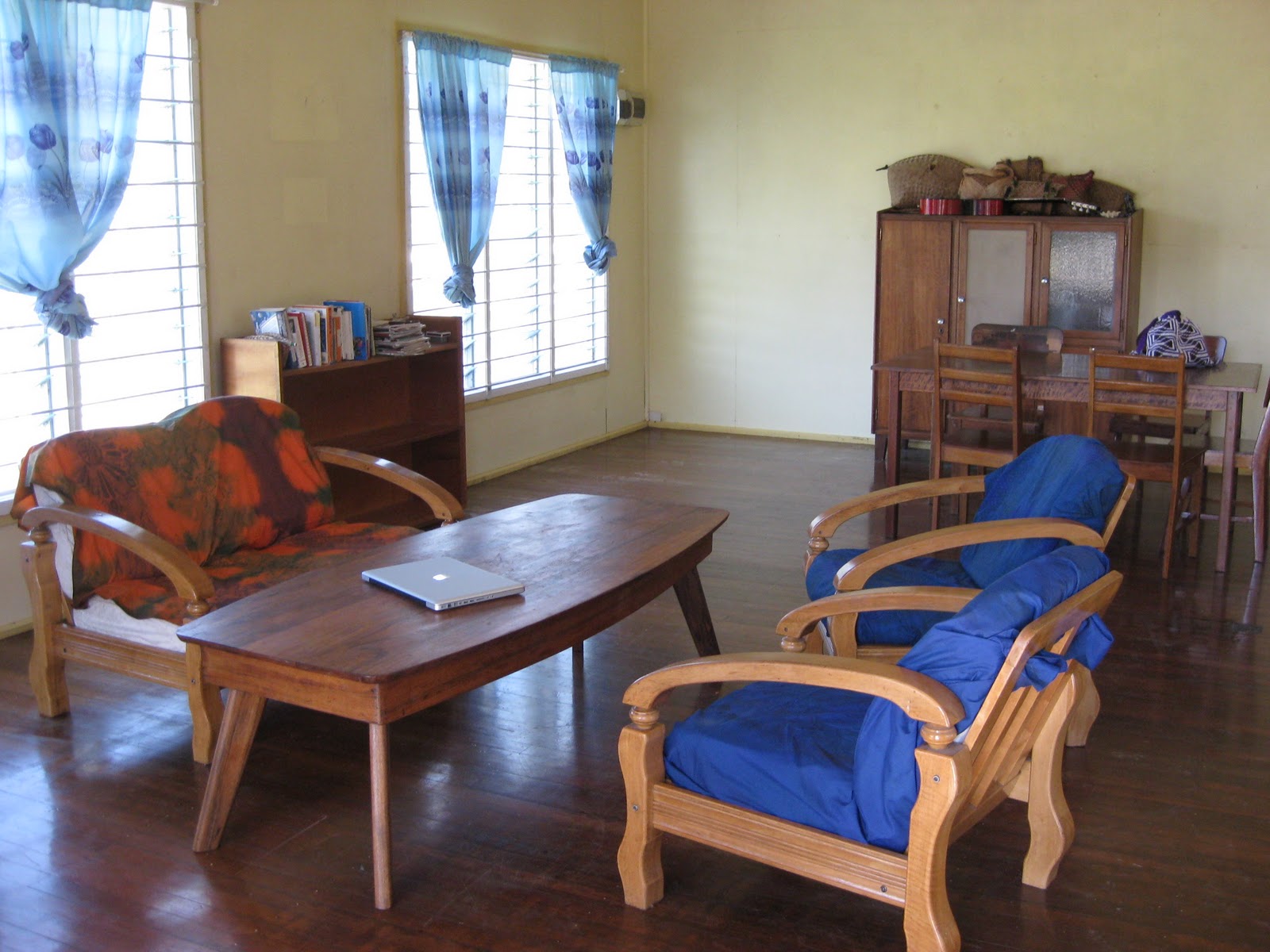
Our lounge room


The Kitchen


Daily walks with Lama

The precinct where we live is full of parkland.


Taken while walking the dog. The view from just near where we live.

The church in our area.


Not such a great photo but these are pink frangipani trees and they give cherry blossoms a run for their money.  In the mornings, kids collect the fallen flowers.

Kids on their way to school.


The local school sports field.

The road to our house, lots of fruit and veg growing everywhere.

Thursday, 6 October 2011

Dr No-love or ‘How I learnt to stop worrying and live with malaria’.


Up until this point, I’ve been writing about my fun adventures in PNG but this time, I felt like I wanted to share what I’ve learnt from my little run in with malaria. From my experience, I now have more faith in the medical support offered here in Kokopo, and a lot of respect for what they have to deal with day to day (some of you know that last month I witnessed a hit and run and with Robert our driver (who is an angel), helped take a young boy (who was hit but is now OK) and his father to hospital. Ask me about that when I’m home if you’re interested in a hard to believe story, I don’t think it’s one for the blog. What is also hard to believe is what the hospitals here have to deal with with such low numbers of staff and limited equipment. Two weeks ago was the first time in my life I have YEARNED for a doctors clinic in Melbourne, where I can bitch about the tardiness of the doctors while I flip through a trashy magazine, glance up at day time telly and sip chilled water in temperature controlled comfort. And there’s a toilet! Not that I’m suggesting people in wealthy countries should feel guilty about having access to decent medical facilities, not at all. I just wish more people around the world could share in our level of discomfort.


‘Mal’aria’ means bad air. Seems so obvious once you know! The Romans once believed that the illness was caused by bad air rising from swamps. Malaria is actually a disease that pre-dates humanity. The ancient Egyptians suffered from falciparum malaria (one of the strains I had) and supposedly, Egyptian Pharaohs slept under bed nets. Amazing to think we are still using the same prevention tactics they did.

Today, according to the WHO -
Half of the world's population is at risk of malaria. Every year, there are nearly one million deaths. Every 30 seconds a child dies from malaria. Malaria is the leading cause of death in PNG.

Shocking stuff so I’ll stop depressing you now.

The British colonialists drank tonic water (which has quinine in it – a malaria treatment) whilst they ponced around India. The tonic water tasted really bitter (oh the poor little lambs) so they added gin and lime and tadah!- a tasty malaria treatment was born. Despite my enthusiasm for the traditional medicine of my forefathers, these days, there is so little quinine in tonic water that it seems you’d need 67 litres of G & T to ward off infection – which makes malaria the least of your worries (thanks Dan though for the suggestion!).

Through lack of a commitment to hard liquor and tonic, a couple of weeks ago I felt like crap and was subsequently diagnosed with malaria, a strain called falciparum. (I later found out I also had vivax.) Falciparum is the nasty one that can turn cerebral.

The medical people I am required to deal with in Australia (If I’m vague about who these people are it’s deliberate) displayed incredibly stereo typically ‘western medicine is infallible’ style logic to my diagnosis. Basically, they didn’t believe it. I had a blood slide done at a lab recommended by the health staff I work with and then got a rapid test done from a pharmacy (I’m told by an MSF doctor working in another part of PNG that these are quite reliable) and this confirmed the diagnosis. The Aus medical people responded to the two different methods of diagnosis from two different sources with – ‘but how sure are you that you have malaria?’

Hmmmm, are you asking the medical opinion of a high school teacher of Japanese? Perhaps I should get in touch with that rogue mozzie who I had a intimate encounter with some time back and ask it straight up if it cheated on me with an infected partner? I mean seriously. I have the symptoms, two diagnoses, I live in malaria central. Of course, the possibility exists that I don't have malaria, but how can I be SURE either way?

The basis for their disbelief you ask? – I’ve been taking a new and very expensive drug, Malarone, as an anti malarial. No one (apparently) gets sick with malaria whilst on malarone. Silly me, I should have explained to the parasite carrying mozzy that someone paid a lot of money for me to be malaria free and wouldn’t they mind moving on to a cheaper host? Oh, and it was also pointed out to me that I was ‘too chipper’ to possibly have malaria (opinion obtained through skype). Yep, thanks for that very scientific approach. Next time I will endeavour to report my symptoms in my best imitation of Don Coleone right before he collapses into the tomato plants.


They then tell me that even though I probably don’t have malaria, to take the treatment anyway. So I do, and I start feeling better. It’s almost like I had malaria and the drugs have worked!

Then, after about a week, I’m sick again. I feel really really not chipper. Back to the hospital (this time a different hospital, one recommended by the Aus medical people). They do a slide and say, you have falciparum. I tell the Aus med team. They say, no way, not possible. You DON'T have Malaria. They tell me to have a full blood test done because I must have something else. I have two full blood tests done at different places. The blood tests suggest that the falciparum malaria is on the way out (so the drugs are working). One expat doctor says that falciparum is present but she thinks it’s under control, but that I also have vivax (another strain) in small amounts. She is also very surprised I don’t have flu like symptoms (I developed those later it turned out) as my bacterial count was very high. She said sometimes people get things like pneumonia after malaria while their immune system is down. Great.

The other blood test comes back (from the hospital) and the lab tech says to me, look, I know what your Australian doctors think but you have got malaria. We can see the malaria and we see vacuoles in the blood (they appear like holes apparently and indicate that the blood has been fighting a foreign something – like malaria). So I take treatment for the vivax, and treatment for the bacterial infection and bang, start feeling better in several days. The Aus medical people still doubt that I had malaria and prefer to believe that I had something magical which produced malaria symptoms and then responded to malaria treatment.

Sorry, do I sound a little sarcastic? It’s just that I would understand if they were being sceptical because they don’t trust the medical help in PNG. My feelings on the medical help available in PNG can accurately be described as ‘iffy’. But on one hand, they don't trust AT ALL the diagnosis of the doctors here, but every time I asked them their opinion on the treatment I’d been prescribed they waved me away with – I’m sure whatever the doctor has prescribed you is fine. Yeah thanks for that. Let’s take the drugs prescribed by people you think are WRONG in their medical judgement.

Turns out, some doctors here do prescribe things which are less than ideal but that’s not because they are incompetent – it’s because they spend all day everyday prescribing drugs for malaria for local people and they sensibly prescribe based on what drugs people can actually access. Which, as it happens, ain’t very much. I was prescribed quinine (sadly not to be taken with gin) by one hospital and then went to their pharmacy and they had NONE! Luckily for me, I’m an expat with money and the means to search for good info. Geoff and I are able to pay for better treatments at the private pharmacies. We were able to find out what we should be taking but no thanks to the supposed ‘medical team’ in Aus. I mean, at every point of the way, they were kind and interested and I felt confident that if I got worse they wouldn’t have hesitated to medivac me out of here, but it was so frustrating to have to deal with their conflicting attitude to the medical opinions of the doctors here.

Much more concerning than my own petty frustrations was that when I went to the hospital, I couldn’t see a doctor because a young man had been attacked by his uncle with a bush knife and the doctors were trying to hold him together. Several small and very still babies were also lying around with drips in, looking so vulnerable, their tired young mothers sitting by them. So, we all were waiting, in vain, lots of sick people in a hot room on broken hospital beds. A big wake up call. Again, having money meant I could go to a clinic run by expats from the Philippines and be seen there. It’s so tough for local people here. And these are the people who can physically get to town and afford the fees at the hospital. Put in this context, my complaints about not getting good support seem pretty pathetic I think you’ll agree. 
 
And why is there no medicine in the hospital pharmacy? I can’t speak specifically about the hospital I went to, but I do know that there is a problem with people stealing drugs and selling them illegally. I just happened to be at the local government building one day (for work) when a ute full or confiscated medicine came in. It’s another long story (kind of like The Wire, PNG style) which may be a bit sensitive to write here, but basically medicine destined for the clinics is sometimes instead available, for a higher price, on the black market.

So, the end of my story is….. I’m healthy. I was treated and looked after and by dint of my privileged Australianess am never likely to be one of those people who die from this disease every year. I know some of my loved ones are ever more scared to visit here now after what they’ve heard from us. Truth is, I’ve been sicker with a head cold. My preliminary research suggests that a few gin and tonics can have positive effects for patients learning not to worry about malaria. If you’re interested in taking part in this research please leave a comment below. 

Thanks for the facebook love when I was sick and moaning through my updates. Much love,
S
xoxo