Saturday, 15 October 2011

Pics - Where we live

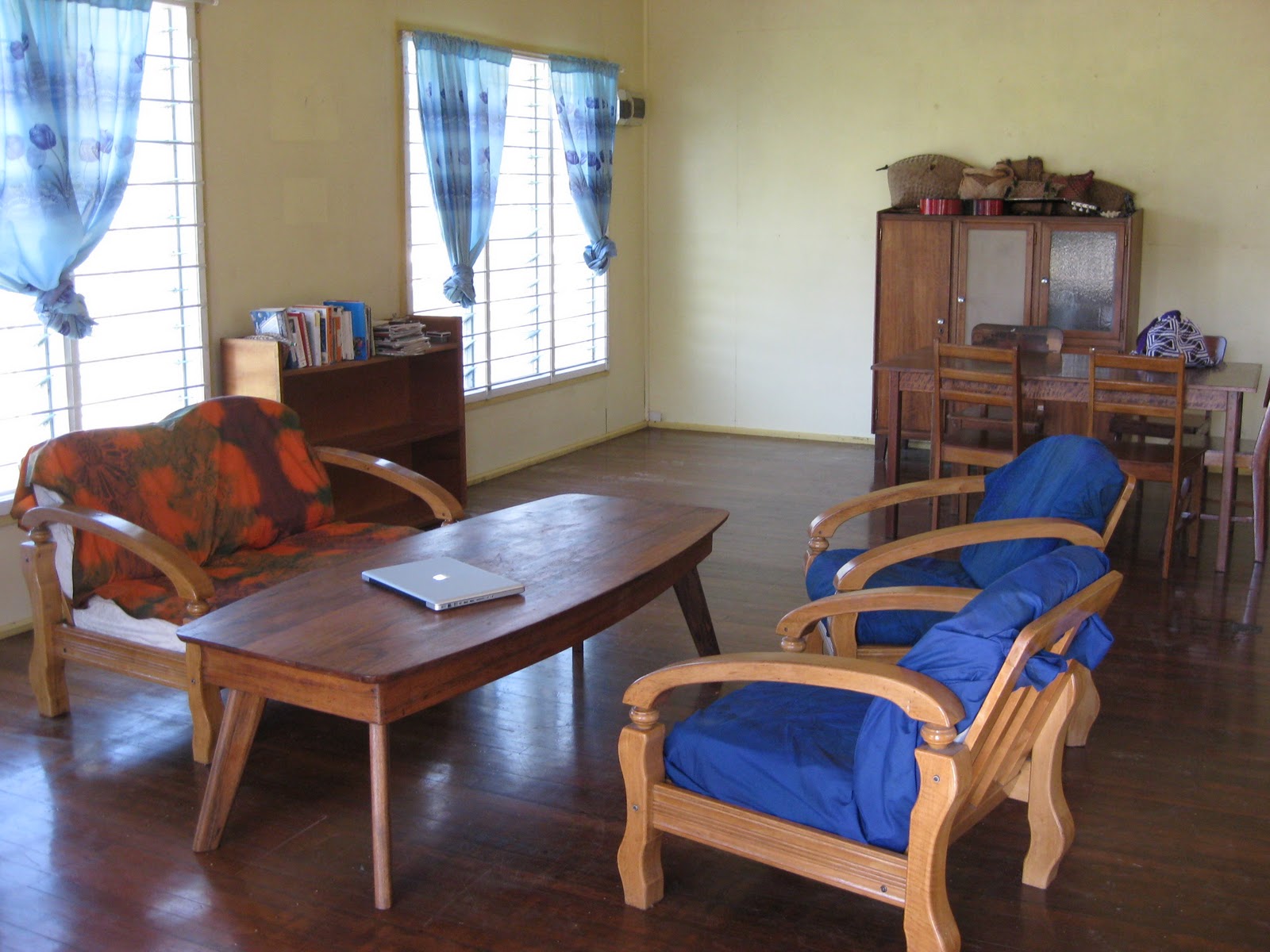
Some peeps have asked for pics of where we live (and both Renees, these puppy pics are for you:) The photos here are of our new place and the area immediately around it where we walk the puppy.

Lama gets his first chew toy.

Lama 


Our lounge room


The Kitchen


Daily walks with Lama

The precinct where we live is full of parkland.


Taken while walking the dog. The view from just near where we live.

The church in our area.


Not such a great photo but these are pink frangipani trees and they give cherry blossoms a run for their money.  In the mornings, kids collect the fallen flowers.

Kids on their way to school.


The local school sports field.

The road to our house, lots of fruit and veg growing everywhere.

Thursday, 6 October 2011

Dr No-love or ‘How I learnt to stop worrying and live with malaria’.


Up until this point, I’ve been writing about my fun adventures in PNG but this time, I felt like I wanted to share what I’ve learnt from my little run in with malaria. From my experience, I now have more faith in the medical support offered here in Kokopo, and a lot of respect for what they have to deal with day to day (some of you know that last month I witnessed a hit and run and with Robert our driver (who is an angel), helped take a young boy (who was hit but is now OK) and his father to hospital. Ask me about that when I’m home if you’re interested in a hard to believe story, I don’t think it’s one for the blog. What is also hard to believe is what the hospitals here have to deal with with such low numbers of staff and limited equipment. Two weeks ago was the first time in my life I have YEARNED for a doctors clinic in Melbourne, where I can bitch about the tardiness of the doctors while I flip through a trashy magazine, glance up at day time telly and sip chilled water in temperature controlled comfort. And there’s a toilet! Not that I’m suggesting people in wealthy countries should feel guilty about having access to decent medical facilities, not at all. I just wish more people around the world could share in our level of discomfort.


‘Mal’aria’ means bad air. Seems so obvious once you know! The Romans once believed that the illness was caused by bad air rising from swamps. Malaria is actually a disease that pre-dates humanity. The ancient Egyptians suffered from falciparum malaria (one of the strains I had) and supposedly, Egyptian Pharaohs slept under bed nets. Amazing to think we are still using the same prevention tactics they did.

Today, according to the WHO -
Half of the world's population is at risk of malaria. Every year, there are nearly one million deaths. Every 30 seconds a child dies from malaria. Malaria is the leading cause of death in PNG.

Shocking stuff so I’ll stop depressing you now.

The British colonialists drank tonic water (which has quinine in it – a malaria treatment) whilst they ponced around India. The tonic water tasted really bitter (oh the poor little lambs) so they added gin and lime and tadah!- a tasty malaria treatment was born. Despite my enthusiasm for the traditional medicine of my forefathers, these days, there is so little quinine in tonic water that it seems you’d need 67 litres of G & T to ward off infection – which makes malaria the least of your worries (thanks Dan though for the suggestion!).

Through lack of a commitment to hard liquor and tonic, a couple of weeks ago I felt like crap and was subsequently diagnosed with malaria, a strain called falciparum. (I later found out I also had vivax.) Falciparum is the nasty one that can turn cerebral.

The medical people I am required to deal with in Australia (If I’m vague about who these people are it’s deliberate) displayed incredibly stereo typically ‘western medicine is infallible’ style logic to my diagnosis. Basically, they didn’t believe it. I had a blood slide done at a lab recommended by the health staff I work with and then got a rapid test done from a pharmacy (I’m told by an MSF doctor working in another part of PNG that these are quite reliable) and this confirmed the diagnosis. The Aus medical people responded to the two different methods of diagnosis from two different sources with – ‘but how sure are you that you have malaria?’

Hmmmm, are you asking the medical opinion of a high school teacher of Japanese? Perhaps I should get in touch with that rogue mozzie who I had a intimate encounter with some time back and ask it straight up if it cheated on me with an infected partner? I mean seriously. I have the symptoms, two diagnoses, I live in malaria central. Of course, the possibility exists that I don't have malaria, but how can I be SURE either way?

The basis for their disbelief you ask? – I’ve been taking a new and very expensive drug, Malarone, as an anti malarial. No one (apparently) gets sick with malaria whilst on malarone. Silly me, I should have explained to the parasite carrying mozzy that someone paid a lot of money for me to be malaria free and wouldn’t they mind moving on to a cheaper host? Oh, and it was also pointed out to me that I was ‘too chipper’ to possibly have malaria (opinion obtained through skype). Yep, thanks for that very scientific approach. Next time I will endeavour to report my symptoms in my best imitation of Don Coleone right before he collapses into the tomato plants.


They then tell me that even though I probably don’t have malaria, to take the treatment anyway. So I do, and I start feeling better. It’s almost like I had malaria and the drugs have worked!

Then, after about a week, I’m sick again. I feel really really not chipper. Back to the hospital (this time a different hospital, one recommended by the Aus medical people). They do a slide and say, you have falciparum. I tell the Aus med team. They say, no way, not possible. You DON'T have Malaria. They tell me to have a full blood test done because I must have something else. I have two full blood tests done at different places. The blood tests suggest that the falciparum malaria is on the way out (so the drugs are working). One expat doctor says that falciparum is present but she thinks it’s under control, but that I also have vivax (another strain) in small amounts. She is also very surprised I don’t have flu like symptoms (I developed those later it turned out) as my bacterial count was very high. She said sometimes people get things like pneumonia after malaria while their immune system is down. Great.

The other blood test comes back (from the hospital) and the lab tech says to me, look, I know what your Australian doctors think but you have got malaria. We can see the malaria and we see vacuoles in the blood (they appear like holes apparently and indicate that the blood has been fighting a foreign something – like malaria). So I take treatment for the vivax, and treatment for the bacterial infection and bang, start feeling better in several days. The Aus medical people still doubt that I had malaria and prefer to believe that I had something magical which produced malaria symptoms and then responded to malaria treatment.

Sorry, do I sound a little sarcastic? It’s just that I would understand if they were being sceptical because they don’t trust the medical help in PNG. My feelings on the medical help available in PNG can accurately be described as ‘iffy’. But on one hand, they don't trust AT ALL the diagnosis of the doctors here, but every time I asked them their opinion on the treatment I’d been prescribed they waved me away with – I’m sure whatever the doctor has prescribed you is fine. Yeah thanks for that. Let’s take the drugs prescribed by people you think are WRONG in their medical judgement.

Turns out, some doctors here do prescribe things which are less than ideal but that’s not because they are incompetent – it’s because they spend all day everyday prescribing drugs for malaria for local people and they sensibly prescribe based on what drugs people can actually access. Which, as it happens, ain’t very much. I was prescribed quinine (sadly not to be taken with gin) by one hospital and then went to their pharmacy and they had NONE! Luckily for me, I’m an expat with money and the means to search for good info. Geoff and I are able to pay for better treatments at the private pharmacies. We were able to find out what we should be taking but no thanks to the supposed ‘medical team’ in Aus. I mean, at every point of the way, they were kind and interested and I felt confident that if I got worse they wouldn’t have hesitated to medivac me out of here, but it was so frustrating to have to deal with their conflicting attitude to the medical opinions of the doctors here.

Much more concerning than my own petty frustrations was that when I went to the hospital, I couldn’t see a doctor because a young man had been attacked by his uncle with a bush knife and the doctors were trying to hold him together. Several small and very still babies were also lying around with drips in, looking so vulnerable, their tired young mothers sitting by them. So, we all were waiting, in vain, lots of sick people in a hot room on broken hospital beds. A big wake up call. Again, having money meant I could go to a clinic run by expats from the Philippines and be seen there. It’s so tough for local people here. And these are the people who can physically get to town and afford the fees at the hospital. Put in this context, my complaints about not getting good support seem pretty pathetic I think you’ll agree. 
 
And why is there no medicine in the hospital pharmacy? I can’t speak specifically about the hospital I went to, but I do know that there is a problem with people stealing drugs and selling them illegally. I just happened to be at the local government building one day (for work) when a ute full or confiscated medicine came in. It’s another long story (kind of like The Wire, PNG style) which may be a bit sensitive to write here, but basically medicine destined for the clinics is sometimes instead available, for a higher price, on the black market.

So, the end of my story is….. I’m healthy. I was treated and looked after and by dint of my privileged Australianess am never likely to be one of those people who die from this disease every year. I know some of my loved ones are ever more scared to visit here now after what they’ve heard from us. Truth is, I’ve been sicker with a head cold. My preliminary research suggests that a few gin and tonics can have positive effects for patients learning not to worry about malaria. If you’re interested in taking part in this research please leave a comment below. 

Thanks for the facebook love when I was sick and moaning through my updates. Much love,
S
xoxo

Saturday, 10 September 2011

I like Diving, not Dying


Nudibranch
Subtropical species of the Chan family
Nemo, I mean clownfish
                                                                                      
OK, this is not an entry for hardcore diving enthusiasts – I don’t actually know anything about diving yet. I’ve got very little to report on in terms of marine life (no idea about names of fish, I’m still at the ‘Oh look, a Nemo!’ stage) and no (good) underwater pics. Thus far, I’m only 2 months post certification so it’s still very much the Jerry Seinfeld approach for me– ‘scuba diving; another fine activity where the main objective is not to kill yourself’ (or something like that). Not that it’s actually dangerous; it’s just that I’m still focusing on a lot about things when I dive - like breathing. Oh, and crocodiles (yes they’re around in some parts) and whether, if I see a croc, I’ll die from sudden inability to draw breath or because Mr Crocodile is keen to try some fine Australian imported meat.


I was told, but our local instructor that I don’t have to worry about salties (crocs, what crocs?). I was also told, by an expat who works here in tourism and is certainly in the know, that there has been a croc culling program at the Duke of York Islands. The Duke of York Islands are only a short boat ride from Kokopo. They have been culling them there because croc sightings have gone hand in hand with missing children. I’m guessing it’s hard to otherwise lose a child on a small island. Liz also told me about crocodile sightings in the water at the base of Mt Tavurvur, the smouldering volcano on the other side of the habour.

I passed on this info to other divers and was scoffed at; ‘oh that, that was just a rogue croc’. Yeah, rogue crocs don’t frighten me at all, bet they’re really mild mannered when they move outside their usual territory. Did I mention that the instructor looks heaps like Bear Grylls of Man vs Wild fame? Especially his side profile. And his compadre, Vinny looks (when he wears sun glasses), a lot like Kanye West. So, I can be a little nervy at the best of times but when my safety is in the hands of Bear and Kanye look alikes? Entertaining more so than reassuring.

Still, diving is awesome fun and fear of crocs aside, it’s beginning to feel safe and at times, even relaxing. Despite strongly resembling a man known largely for riding rapids on his backpack and relying on juice of elephant poo for nutrients, our instructor/dive guide is a very careful and all around entertaining kind of guy. And Vinny is definitely cooler and thankfully, a hell of a lot more chill than Kanye.

Last week, however, Geoff and I ventured out from under the care of Bear and Kanye and went diving with a group of individuals who can only be described as diving renegades.

Now don’t be concerned, Geoff and I stayed within the limits of what we are qualified to do. Liz – my diving instructor in Byron – if this gets back to you, I promise I was a good girl and didn't do anything that would make you cross. But the whole scenario was, as my lovely American colleague in Japan (hey Rodney!) would say ‘off the hook’.   

To begin with, a group of us (Aussie and Kiwi expats) got on a banana boat and went off to Rabaul to meet with another boat, the Barbarian II. The Barbarian II was built and is owned and operated by a very hospitable guy who was born in Rabaul to Australian parents. He will from this point onwards be referred to as BII. In his own words, BII is a PNG ‘lifer’ and he knows everything there is to know about what went down in East New Britain in WWII. His hobby (though this word does not suffice) is using sonar to locate war wrecks, dredging them and raising them up. He contacts the relevant country and sees to it that if there are bones within, they are returned as appropriate. To my knowledge he’s raised planes for the Japanese, Americans and Australians. He has been diving since the 70s and he dives every single day. The word on the street is that this man has had the bends so many times they don't even bother treating him in the decompression chamber in POM, he just deals with it himself. The man is basically a walking nitrogen bubble. It’s hard not to be amazed and impressed by a man like this.

Well, we were all on board to help him raise the engine of an Avenger - a WWII American plane. The bones of the pilot and possibly the gunner are still inside. The engine was still resting on the bottom of the ocean, separated from the body of the plane. For some time now, the team (fancy word for ‘group of crazy expats’) has been dredging around the engine and today, the plan is to raise it.

First, we have a dive briefing. From my limited diving experience, dive briefings usually go something like this;
‘So, we’ll descend on the rope, take your time, let me know if you have any equalizing issues. We’ll be diving to a maximum depth of..... and so on and so forth’

They are usually informative. They include helpful reminders about safety. They make sure everyone is on the same page.

On Saturday, the dive briefing went something like this….
  
BII: OK, we’re gonna go down and attach the float bag. We’re gonna fill her with air, we’re gonna try and raise this thing. Trouble is, you never know what’s gonna happen. This is a 2 tonne air bag, could be that we haven’t dredged enough to lift the engine, could be that the engine shoots out of the water in who knows what direction and sometimes, when it surfaces, it just keeps flying up, out of the water and then, when it falls, well, you don’t wanna be in the way of that. So, you just gotta watch it, and get the hell out of the way if it's coming towards you, just swim in the other direction. And Steve, when you’re ready mate, tap on your tank to signal me, I mean, don’t just give it a little tap, really wack that thing cause I gotta know when you’re ready.

Concerned member of dive team: What if you don’t hear it?

BII: What was that son?

Concerned member of dive team: WHAT IF YOU DON'T HEAR IT?

BII: Nah, should be good, sound travels better in water ya see. Now, I need to take down 2 of you. The rest of you, I don’t want you in the water AT ALL. This is dangerous and we’ve lost a few divers in this habour this way. Now, who’s gonna come?

No points for guessing that Geoff and I, in all our wisdom did not raise our hands, but there were others whose hands shot up like 7 year olds competing for lunch monitor. Geoff, myself and a few other sensible chaps waited on the boat and sure enough, the float bag did surface, with the engine attached. There were no dramas and all were accounted for, though when BII did surface, he looked a little worse for wear and was mumbling about ‘being too old for this’.

Geoff and I got to dive later on in the day. BII took me down with him to the site of the plane and I helped him move the pipes for dredging. (I say helped but he didn’t actually need my help, I was merely along for the ride) and Geoff went down later with another guy and did some manly dredging. To his credit BII took great care of a newbie like me, literally holding my hand as we descended through visability crushing jellyfish and a strong current. It was awesome to see the plane and all the wild life that now lays claim to it.

Fastforward to Day 2 on the Barbarian II. Today’s challenge, should we have chosen to accept it (we didn’t) was to drop to about 30m (I’m only certified to go to 18m), along the anchor chain. Then, to RIDE the anchor along the bottom of the ocean looking for a possible wreck, as BII drives the boat along, using his sonar tech to locate the suspected plane. Other than the blindingly obvious safety concerns posed by the above plan, add in the complication that, should one of the divers let go of the anchor or suddenly need to surface, BII will have no way of knowing and would still be moving the boat forward. The diver would then surface, in choppy water (which prevents us from seeing his bubble stream) god only knows where, but somewhere in the middle of a shipping lane.

I straight away said, ‘not for me folks’, but 2 individuals, both expats here in East New Britain ‘encouraged’ me to join them with the kind of enthusiasm year 9 boys usually reserve for pressuring their peers to sniff glue. They even stooped so low as to suggest that readers of my blog, bored out of their mind with my endless prattle would relish an entry about death defying diving stunts, and didn’t I want to deliver that kind of excitement to my readers? I argued that despite a stubborn adherence to general norms of safety thus far, my family and friends still tolerate me and even at times, seek out my companionship. They shook their heads, felt pangs of sympathy for my surely bored brethren and then got kitted up to play horsey with the anchor of a moving boat.

I am pleased to report that all individuals concerned surfaced safe and sound and no doubt yearning for more adventure.

This weekend, there will be no diving for us as Geoff is recovering from the evils of Malaria. (Thanks for the many ‘get better soon Geoff’ facebook comments – he is getting better J. Maybe the weekend after we’ll dive. So, my fellow diving friends, anyone up for visiting? And for all you cats who don’t dig life under the sea, there are many safe and beautiful places to snorkel. And the water? 29 degrees. Sounds warm, and it is right near the shore, but still really refreshing just a little further out. Any takers? I promise not to send you off to raise plane wrecks with a bunch of cowboys but if that’s your game, I can hook you up.

Lukim yu              

Sunken Japanese Zero


Territorial fish pretending to be pilot. 

Rabaul when it's not covered in ash and dust.

Rabaul, taken from the Harbour, cloaked in dust and ash from the volcano. People actually live here.

Wrecked and abandoned ships in Rabaul.


Wrecked ships converted into homes (and some, allegedly, brothels).
Taken from the site we dived at in Simpson Harbour.

Mt Tavurvur, the cause of all the dust.

Tuesday, 23 August 2011

A prison for your breasts?


Before I explain the title for this post, a few important facts about languages in PNG (you can just imagine how excited a language nerd like myself gets over this stuff).

Fact #1. There are approximately 800 languages in PNG. This equates to one fifth of the world’s languages. No, not dialects, languages. Not even languages as in Spanish and Portuguese, where, to quote my good Peruvian friend Erik, ‘only a total d*#khead would be able to speak fluently in one and claim to not understand any of the other’. PNG languages are distinct and usually unrelated to each other. So, unsurprisingly, Pidgin or Tok Pisin as it’s called here, is a very useful tool for communication. Everyone that Geoff and I work with can speak English. They speak really good English, but when they speak together they use Tok Pisin, (they are ethnically from a variety of different backgrounds and not all of them can speak Kuanua, the local Tolai language).

Interesting (to me) fact #2, Tok Pisin is very similar to Bislama, spoken in Vanuatu, and the Pidgin spoken in the Solomon Islands. It combines English, (apparently) German and local languages – and of course, this results in some truly awesome expressions.

When I was on the plane (second flight so I was no longer sitting next to the fear inducing American Oil Man), I sat next to an Australian, who told me that the Tok Pisin word for ‘helicopter’ is ‘mixmasta bilong Jesus Christ’. Yes, sceptical looks followed. How ridiculous. Surely this is the equivalent of the stories about ‘drop bears’ which Australians enjoy spinning to tourists. Naturally, I (secretly) wanted it to be true and was already planning to work it casually into a sentence. Within a day of arrival, I did what I now always do when in doubt (about every 15 minutes in this country), I asked Robert the driver.

Me: Robert, how do you say ‘helicopter’ in Tok Pisin?
Robert: Simone, we say ‘helicopter’. Well, sometimes we say ‘chopper’.
Me: What about ‘mixmasta bilong Jesus Christ’?
Robert: No. We don’t say that. That sounds a little crazy.

Drop bears indeed.

Like finding out that Santa isn’t real.

But here are some quality expressions that are in circulation!

Kalabus bilong susu = bra (literally: a prison for your breasts), OK, turns out this one is kinda old Pidgin and your young, hip Papua New Guinean just says ‘bra’ but it was used and is still understood J
Hamas krismas bilong yu? = How old are you? (lit. how many Christmases do you have?)
Wok painim aut = research (lit. wok to find out –what I’m doing!)
Man bilong mi = husband
ai bilong me hevi tru = I’m tired (eyes belonging to me are truly heavy!)
Em tru tru laikim = It’s true love J
Liklik haus = toilet (liklik just means small)

Now for the next one, I’m sure very few of my friends will find this amusing, being great bastions of maturity, but for the childish amongst us, ‘kisim pinis’ (you really must say it out loud for effect) is just the past tense of ‘take’, so posing the question, ‘Yu kisim pinis?’ means, innocently, ‘did you take it?’ J


Yep, Tok Pisin is really fun to learn and our driver and team leader are wonderful teachers, teaching us useful words like ‘egg’ (kiau) and more importantly, that ‘kiau’ in Tok Pisin is used much like ‘balls’ in English. So, if you go around talking about breaking eggs, needing some eggs, etc, it could be very funny for all concerned.

This is the kind of help I found lacking in Japan, where people were too polite to correct me and too embarrassed to teach me the slang (the exception being Furihata Sensei who ALWAYS told it like it was). So far, with Tok Pisin, I’m getting good honest help from the team at work so I’ve got no excuse not to pick up quite a lot and frankly; I’m screwed without it. Fortunately, it’s not anywhere near as hard as learning Japanese or Russian, and already, if the topic is familiar, I can understand a lot.

Which brings me to the topic of which I am familiar. I spend most of my time hearing discussions about STIs, multiple sex partners, pregnancy and breastfeeding (and the many ways in which these areas overlap). As a result, I know how to ask ‘Do you think most women would tell their husbands if they had symptoms of an STI?’ (honestly, I really can and if need be I can explain what those symptoms might be) but I can’t talk about the weather at all. Well, that’s not quite true, I can say ‘The volcano’s really smoking today!’ but all other weather patterns are beyond me. I’m also still struggling to ask for things at the market. But I can ask ‘Do you know of some ways by which a women can increase her supply of breastmilk?’ Yep, you can imagine what a hit I’d be at a dinner party, (if dinner parties were held here).

One thing that’s hard for me to accustom myself to, are words like bossmeri and masta. While Australians were here, ruling the roost and generally bossing people about, white men were called ‘bossman’ and their wives, ‘bossmeri’ (meri is woman). The men were also called masta. (Bossman/meri is still used though, for a boss including PNG people who are bosses.) The other day, a small child (about 3 years old) in a village waved goodbye to me and said, smiling, ‘bye masta’. The staff I were with fell about laughing, not because the general title is inappropriate, but because he got the gender wrong. The kid sees a white person and that overrides any sense of gender. He should have said the female equivalent (if anything like that at all). They thought it was funny cause I’m not a man. I thought it was appalling for many other reasons. The kid’s only three for Christ sakes. Colonial times are long gone. I sometimes get called waitmeri too which is fine, I truly am rather white. But I’m not down with this ’masta’ stuff. Fortunately, this is the exception rather than the rule. Usually, I just get giggled at.

Oh, lastly, in my previous post, I wrote that kids cry when they see me. Last Saturday, Geoff and I went to the market, and a little girl, maybe 2 or 3 years old and super cute, just ran up and grabbed my hand, looking up at me with the biggest smile. Her amused parents came and dragged her away and she kept her hand reached out behind her, trying to grab me until I was out of sight. Some kids also see me and wave and laugh. So, I’ve realized, I’m a clown to them. Some kids love a clown – it’s pure entertainment for them, other children (and some adults, Danielle I’m looking at you) are deathly frightened of them. Hence the crying.

OK, enough from me,

Gutpela weekend long yupla.

Sunday, 14 August 2011

Photos - life in Kokopo


Our street (our place is on the right hand side)
Elder member of the gecko family who live in our kitchen

'Beagle'

'Tipi' the wannabe tough guard dog

Me having lunch at work 

Kids playing at the beach (baby asleep in front)

Beach at Rapopo (where we snorkel)
Smoking Mt Turvavur (taken at about 3 km from home)

Friday, 12 August 2011

Kokopo – like Kokomo if Tom Cruise wasn’t around to piss you off


Ahh, life in the tropics, so many coconuts, so much time to knock 'em back. Actually, it hasn’t been that hot, lots of rain at night, warm but breezy during the day. So far, things are really good (only 2 weeks in, still early days I know). Here are, in a convenient dot point form, points of interest from life in Kokopo;

·       - We have a garden with 11 coconut trees.
·      - There are 3 dogs (quite skittish but very cute).
·      - Geckos (some quite big) live in my kitchen.
·      - I get to wear muu muu and people think it’s normal – and fashionable.
·      - I can see a smouldering volcano from nearly anywhere in the town.
·      - When babies see me they start crying – unless they were already crying, in which case the shock makes them forget what they were crying about.
·      - I can get a really good bento from the market for about $1.20 Aus, which is wrapped and tied up in a banana leaf.
·      - My colleagues don’t have to worry about losing pens, they stick spares in their afros (so many awesome afros).
·       - My house is decorated with bible related paraphernalia and we have inherited many fine board games – if anyone comes to visit I promise to let you play Bible Marathon (Copperfield ladies – games night soon?).
·       - Small children walking down the street call out to greet me; waving, smiling and occasionally carrying a machete.
·       - There is a bar we went to in town, which locals and expats go to, but you can’t just rock up, it seems you have to ring up and put your name down. It’s free to get in and you get 2 free drinks per person. There’s pretty serious security on the outside, but inside, just a bunch of people looking very chill, drinking South Pacific Brew, looking out to the ocean and listening to a local band.

Yep, that’s the main stuff I think. Other news is that I’ve taken up some hobbies; yoga and the guitar. Both are reminding me of how old I am and how much harder things get.  Have also made friends with some great Kiwis and Australians and the people I work with (all PNGns) are a truly fantastic group of people – am learning so much from them. 
I’m also trying very hard to learn PNG pidgin, or Tok Pisin and our driver Robert is an awesome teacher. I think I’ll write about that next time, they’ve got some very nice words which I’d like to share with you all (or record for posterity if no one reads this J).

Lukim yu

POM – Port Moresby or Place Of Misery?


So, I’ve arrived.
In Papua New Guinea.
If there was ever a time for me to write a blog, I guess it’s now.

Spent a night in Sydney and from there flew straight to Port Moresby which from here on in will be referred to as POM - what all the expats call it (not sure bout the locals). POM, by it’s longer, official name, will forever remind me of many happy times playing ‘Where in the World is Carmen Sandiego’ in primary school. The name ‘POM’ however, is new to me and conjures up images of convoys, compounds and carjackings. This image has been entrenched by the many warnings of just about everyone I know (and the many blogs of people I don’t know) and was reinforced by the nice man from Houston who works for an oil company and sat next to me on the plane. He kindly informed me that Qantas will not permit its female flight attendants to fly to POM, a policy that he adheres to with regards to his wife and daughter. My efforts to brush this off with ‘silly overprotective men’ took a slight battering when he proceeded to tell me that his teenage daughter was without her mother in Mumbai and having a great time. Hmmm.

Those who know me well know that I am not too fond of flying (thank you Anna and Renee L for holding my hand) and so I’m happy to chat to someone to prevent my mind from composing final texts of love to Geoff in the ‘unlikely event of an emergency’. This time, flying was the least of my worries; my biggest worry was POM and listening to further bad stories about it from the Nice Oil Man. What if my connecting flight was cancelled? What if I had to stay on my own in POM? Everything I’d read and heard had me to thinking that I’d rather be in Kabul.

I turned my attentions to the inflight magazine, unconvincingly called ‘Paradise’. In Air Nuigini’s inflight mag, the usual adverts for overpriced restaurants with supposedly local cuisine are replaced by ads for Bisleys’ Insect Repellent Workwear – for Aussies who Hate Mozzies. ‘Protect your workers from malaria and lyme disease’. Yes paradise indeed.

I gave the inflight meal a go, nothing like trying to digest airplane food to take your mind off other problems. Except this was so bad, it didn’t even make it to the digestion stage. I couldn’t eat it. Any of it. And before you think I’m expecting too much (yes, airline food is always bad), let me just say that what they served on Air Nuigini made the offerings on a China Eastern domestic flight look like the degustation menu at Vue de Monde. So nasty.

Then I arrived and did the visa queue thing. And while I was patiently queuing, four Australian expats behind me were having a conversation that went something like this…

“Did I tell you we had dinner with the attorney general?” (or was the governor?)
“No, how was that?”
“Great. Nice guy. Did you hear he got shot?”
“Really? Raskols?”
“Yeah, they shot him in the shoulder but he’s fine now.”

Not helpful to earsdrop. Not helpful at all. And just when I was thinking that this is the first time in my life that I’ve landed but not actually wanted to land in an overseas location, I hear the most beautiful and melodious, deep singing voices. Some kind of ‘Welcome to PNG – not everyone here wants to steal your shit and shoot you’ kind of airport arranged performance. It worked a treat for me. It was very calming. I got through customs, checked in again, made the change to the domestic terminal (which involves, wait for it; walking OUTSIDE) and got through security and the only thing that happened was that as I was walking outside the airport to change terminals, a lot of people smiled at me. Sometimes in a welcoming way, sometimes in a you-look-funny kind of way, but not at all in a menacing way. My flight to Kokopo left on time (which is apparently a minor miracle in itself) and we flew to Kavieng in New Ireland Province and then onto Kokopo in East New Britain. During the stop over, we just waited on the tarmac and a few people got on, some with bare feet and their carry on luggage in woven baskets.

So, we landed in Kokopo, via a big swoop around Mt Tavurur which is seriously smoking and looks amazing. I promise that the next instalment will not be about inflight magazines or how I’m really a big cry baby. It might actually be about something related to life in PNG. I just had to be honest about my initial headspace (yes Andras, you also really helped with that J)

Lukim yu